

Many customers ask: Should I use injection molding or vacuum forming for my product/project?
Many clients send inquiry to us with 3D drawings, only to find that they are typical injection molding drawings, while their needs are actually better suited for vacuum forming. This not only wastes time but can also lead to inaccurate cost estimates.
This article will guide you through a comparison across several dimensions to quickly determine which process to choose, ensuring your product is on the right track from the initial design stage.
Comparison of vacuum forming and injection molding in 7 aspects
1.Process Principle
Vacuum forming
"Suctioned out": Heating a plastic sheet, covering a mold, and vacuuming to adsorb and shape it.
Injected molded
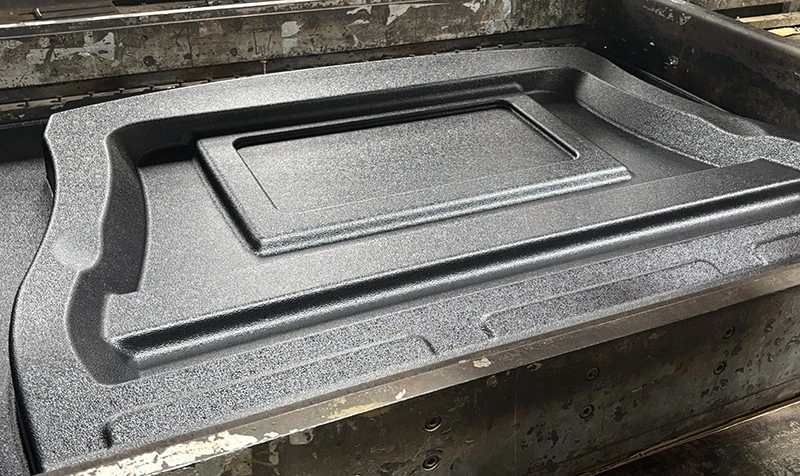
"Injected" refers to the process of injecting molten plastic under high pressure into a sealed mold cavity, where it cools and solidifies.
Distinguish the key at a glance
Imagine the action: Is it "sucking" or "squeezing"?
2. Mold
Vacuum forming
Simple and low cost: Usually a single-sided mold (concave/female/ or convex/male), the material can be aluminum, resin or even wood.

Injected molded
Complex and costly: It must be a precision, high-pressure resistant double-sided mold (male mold + female mold), usually made of steel.

Distinguish the key at a glance
Examine the drawings: If the drawings show a complex assembly with sliders, threads, etc., it is usually injection molded. Examine the actual part: Vacuum-molded parts have an empty back, while injection-molded parts have mold joint lines on the back.
3.Raw material
Vacuum forming
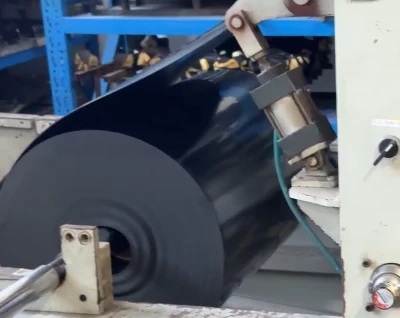
Plastic sheets/plates: such as PVC, PET, PS, ABS, PC, etc., supplied in roll or sheet form.

Injected molded
Plastic granules: such as PP, ABS, nylon, PC, etc., with a wider range of types, and complex color masterbatches and fillers can be added.
Distinguish the key at a glance
Observe the form: Is the raw material in sheets or granules?
4.Production process
Vacuum forming
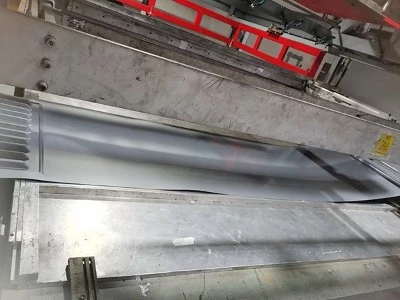
Short cycle, low pressure: heating -> adsorption -> cooling -> cutting. Pressure mainly comes from atmospheric pressure.

Injected molded
Long cycle and high pressure: mold closing -> injection -> holding pressure -> cooling -> mold opening and ejection. Requires extremely high injection pressure.
Distinguish the key at a glance
Listen to the sound/observe the speed: Vacuum forming has a fast pace and low noise; injection molding machines have complex movements and high noise.
5.Product structure
Vacuum forming
Thin-walled, hollow: typically shell-shaped or tray-shaped, with relatively uniform wall thickness, but thinning at the corners. Unable to form complex internal structures.

Injected molded
Complex 3D, solid: Can be molded into fully three-dimensional parts with threads, snaps, reinforcing ribs, and complex concave and convex shapes. Wall thickness can be precisely controlled and varied.

Distinguish the key at a glance
Examine the backside: Vacuum-formed parts have a hollow back (single-sided molding); injection-molded parts have a fine structure on the back (double-sided molding). Feel the edges: Vacuum-formed parts usually have trimmed burrs; injection-molded parts have parting lines.
6.Cost and Output
Vacuum forming
The mold cost is extremely low, but the unit cost is relatively high: suitable for small to medium batch production (tens to tens of thousands of pieces). Prototyping is fast and mold modification is easy.
Injected molded
The mold cost is extremely high, but the unit cost is extremely low, making it suitable for ultra-large batches (tens of thousands to millions of pieces). The higher the production volume, the more obvious the cost advantage becomes.
The crucial question: What is your expected output? This is the most fundamental basis for decision-making.
7.Typical application
Vacuum forming
Large-size, thin-walled packaging and interior parts: such as electronic packing trays, packing box, car door panel liners, bathtubs, refrigerator liners, and advertising light boxes.
Injected molded
Small precision structural parts and high-load components: such as mobile phone cases, gears, connectors, toy components, appliance housings, buckets, basins, etc.
Consider size and details: Large, shallow shell? Choose vacuum forming. Small, intricate three-dimensional parts? Choose injection molding.
A diagram to tell you whether to choose injection molding or vacuum forming
What are my product requirements?
↓
Expected annual output?
╱ ╲
< 10,000 pieces > 50,000 pieces
∣ ∣
Is the product thin-walled shell-shaped? Is the product structure complex?
╱ ╲ ╱ ╲
Yes No Yes No
▕ ▏ ▕ ▕
Consider vacuum forming? A reassessment is required. Considering injection molding, vacuum forming also ok
▕ ▕
Large size Pursuing the ultimate unit cost
╱ ╲ ▕
Yes No Yes
▕ ▕ ↓
Vauum forming require composite materials/other processes Firmly choose injection molding
Ultimate Advice for Clients: Get it Right from the Drawings
A Message to Designers: If you decide to use vacuum forming during the design phase, please note: increase corner radii, avoid vertical sidewalls, allow draft angles, and pay attention to the draw ratio. Attached is a comparison chart of "vacuum forming-friendly design" and "injection molding design."
Call to Action: "If you are still unsure, feel free to send us your drawings. Our engineers can provide a free process feasibility assessment to help you optimize your design from the outset, saving time and costs."
Summary and Frequently Asked Questions (FAQ)
vacuum forming is a process for "covering large areas with low mold costs," while injection molding is a process for "achieving complex, precise, and high-volume production with high mold costs."
FAQ:
Q: Can products with screw studs be made using vacuum forming?
A: It's difficult. Screw studs usually need to be formed from the back, which is impossible with vacuum forming. Consider post-production welding or bonding.
Q: My product volume is large, but the dimensions are also large. Injection molds are extremely expensive. What should I do?
A: This is precisely where vacuum forming excels! For example, it can achieve mass production of automotive interior parts and bathtubs at an acceptable cost.
Q: What are the differences in surface texture between the two processes?
A: Vacuum forming can create very good textures, but the depth is limited by stretching; injection molding can replicate extremely fine textures.
So if you would like to know your project suit for vacuum forming or injected molded? Please feel free to contact us.
Suzhou Swellder Plastics
Elena
elena.zheng@swellder.com
+8613617041545