

Growing Trays
Our factory is located in Suzhou Industrial Park,adjacent to Shanghai, with a production workshop of 3,000 square meters. We are equipped with our own R&D, design, and sales teams, with experienced mold engineers, designers, production personnel, inspection personnel and export logistics and can provide customers with Provide rapid prototyping services and free samples. It has been very mature in using ABS, PP, PC, PE, PVC, PET, PETG, HIPS, PMMA and other materials and can produce high-quality products.

Why Choose Us
01
Our Service
Vacuum forming works with a variety of plastic materials, such as ABS, PVC, and PETG, providing flexibility in material selection based on specific needs.
02
Our factory
Our factory is located in Suzhou Industrial Park,adjacent to Shanghai, with a production workshop of 3,000 square meters.
03
Production Equipment
8 sets vacuum forming machines, 3 sets 5-axis cnc cutting machines, 2 sets 3-axis cnc cutting machines, 2 sets die cutting machines, 1set bending machine.
04
Production Market
Domestic, USA, Canada, France, Ireland, Belgium, Switzerland, Sweden, Finland, Australia, New Zealand, Japan, Korea and etc.
-
![Customized Vacuum Formed Growing Tray]() Customized Vacuum Formed Growing TrayThe vacuum forming process, with its low cost, high efficiency, and extensive design freedom, particularly excels at producing lightweight, large-scale products, has long been the preferred...read more
Customized Vacuum Formed Growing TrayThe vacuum forming process, with its low cost, high efficiency, and extensive design freedom, particularly excels at producing lightweight, large-scale products, has long been the preferred...read more -
![PS1020 Shallow Water Planting Tray]() PS1020 Shallow Water Planting TrayProfessional dual-version design meets various planting needs. Made from high-quality PS material, sturdy and durable without deformation. Reinforced base offers excellent load-bearing capacity,...read more
PS1020 Shallow Water Planting TrayProfessional dual-version design meets various planting needs. Made from high-quality PS material, sturdy and durable without deformation. Reinforced base offers excellent load-bearing capacity,...read more -
![Thermoforming Large Growing Tray Match Flow System]() Thermoforming Large Growing Tray Match Flow SystemThe vacuum forming process, with its low cost, high efficiency, and extensive design freedom, particularly excels at producing lightweight, large-scale products, has long been the preferred...read more
Thermoforming Large Growing Tray Match Flow SystemThe vacuum forming process, with its low cost, high efficiency, and extensive design freedom, particularly excels at producing lightweight, large-scale products, has long been the preferred...read more -
![Heavy Duty Planting Growing Tray]() Heavy Duty Planting Growing TrayOur company was established in 2006. It is a comprehensive enterprise specializing in the thermoforming plastics industry, integrating R&D, design, production, and import and export trade. The...read more
Heavy Duty Planting Growing TrayOur company was established in 2006. It is a comprehensive enterprise specializing in the thermoforming plastics industry, integrating R&D, design, production, and import and export trade. The...read more -
![Vacuum Forming Plastic Large Growing Tray]() Vacuum Forming Plastic Large Growing TrayThe products are widely used in automobiles, home appliances, food, medical, toys, bathroom, advertising display , scientific research and teaching industries.read more
Vacuum Forming Plastic Large Growing TrayThe products are widely used in automobiles, home appliances, food, medical, toys, bathroom, advertising display , scientific research and teaching industries.read more -
![Large Size Fodder Table Growing Trays]() Large Size Fodder Table Growing Trays1:Have you seen seedling trays that can hold a brick before without collapsingread more
Large Size Fodder Table Growing Trays1:Have you seen seedling trays that can hold a brick before without collapsingread more
2:The Extra Thick Black Plastic can withstand heavy loads.
3:Won't break or warp while moving trays... -
![Vacuum Forming Custom Large Growing Tray]() Vacuum Forming Custom Large Growing TrayOur more than 10 year relationships with our major customers are proof of our high quality standards and complete customer satisfaction. We have proven to be an innovator of new ideas for old...read more
Vacuum Forming Custom Large Growing TrayOur more than 10 year relationships with our major customers are proof of our high quality standards and complete customer satisfaction. We have proven to be an innovator of new ideas for old...read more


What is Growing Trays?
Growing Trays come in various shapes and sizes, from freestanding to windowsill options, meaning you can cultivate seeds in even the smallest spaces. Offering a chance to plant seeds indoors or outdoors, the humble grow tray will be your seedlings' first home, providing a safe place to support your plants in the first few weeks of their life.
Growing Trays are a low-key way to get started with planting, requiring minimal effort. Trays are available in a variety of price points, so you can start your planting journey without spending lots of money. Growing from seed is a more cost-effective option than buying established plants.
Benefits of Growing Trays
Reusable and environmentally friendly
With a focus on sustainability, these Growing Trays have been designed to be reusable. This not only saves you money in the long run, but it also reduces waste and promotes eco-friendly gardening practices. By investing in these trays, you’ll be doing your part for the environment.
01
Versatile use
Whether you prefer traditional soil-based gardening or hydroponic growing, these Growing Trays are suitable for both methods. Their design allows for easy adaptation to your preferred growing technique, making them a versatile option for any gardener. Additionally, these trays are great for greenhouse use, as well as growing a wide range of plants such as seedlings, wheatgrass, and microgreens.
02
Efficient water management
With no drain holes, these Growing Trays excel in water management. They prevent excess water from escaping, ensuring that your plants receive the right amount of moisture without drowning. This feature is especially beneficial for seed starting and hydroponic growing, where precise control over water levels is crucial for successful plant growth.
03
Spacious dimensions
Measuring approximately 21″ by 11″ on the top and 20″ by 10″ on the bottom, these Growing Trays provide ample space for your plants to grow. The generous size allows room for healthy root development and ensures that your plants have enough space to flourish.
04
Major Types of Growing Trays
These trays are specifically designed to help you start seedlings, whether starting a new plant from scratch or transplanting seedlings into larger containers. Seed starter trays typically consist of a tray filled with small planting cells, which can be either plastic or biodegradable. These trays allow easy access to the individual cells, making it simple to care for your seedlings as they grow.
Your plants or watering tools, such as sprayers and drippers. Water-catching trays typically consist of a flat base with sloped sides and can be made from various materials, including plastic, rubber, or even concrete.
Finally, there are light-blocking trays. These trays are designed to help you create the perfect growing environment for your plants by blocking out excess sunlight and preventing temperatures from getting too high. Light-blocking trays are typically made from rigid foam board or cardboard and can cover windowsills and other surfaces that may receive too much direct sunlight. Whether you are starting seeds, collecting water runoff, or creating the perfect growing environment for your plants, there is a growing tray that is right for your needs.
Why Are Microgreen Growing Trays So Trending?
If you want to cultivate nutrient-rich microgreens indoors, the most dependable way to do so is by using a microgreen growing tray. Normally these shallow containers contain potting soil with a layer of seeds evenly spread throughout for harvesting. This method ensures that your microgreen crop flourishes and provides an abundance of greens. You can also use lights to supplement your trays. When using lights, make sure to leave a few inches of space between the tray and the light source. This helps prevent burning while still providing adequate illumination during growth.
Make certain to rotate your trays or lights occasionally so all parts of the tray get equal illumination. Do not forget to water your trays regularly and evenly, as too much or not enough water can stunt the growth of your microgreens. With a little time, patience, and consistency you will be able to enjoy an abundance of fresh, flavorful microgreens right from the comfort of home.
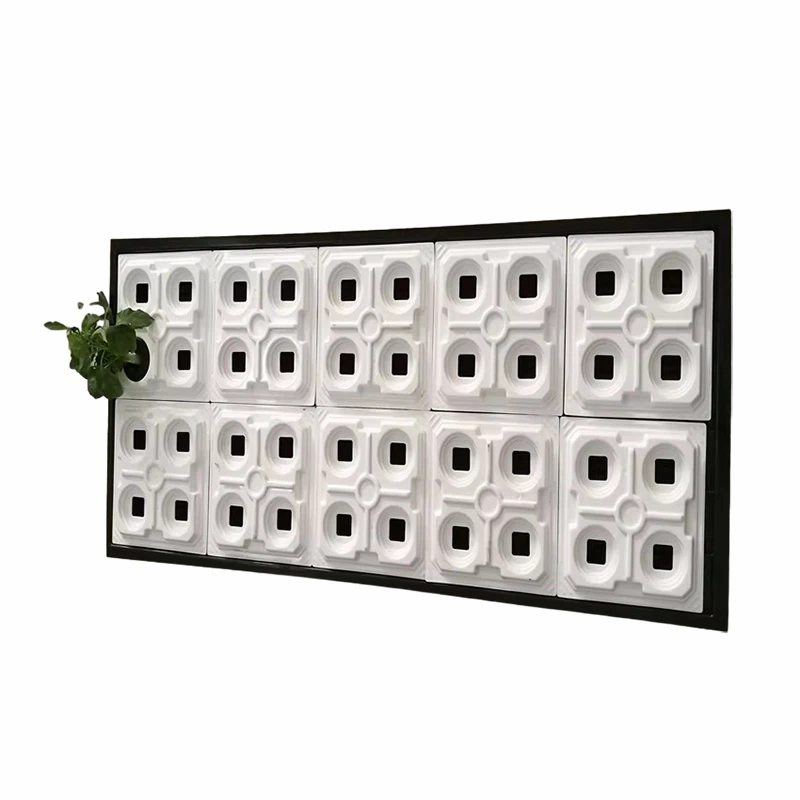
Growing Trays Buying Guide
Spac
If you have plenty of space to house your hydroponic garden, then there’s no reason why you can’t go big and opt for a larger, more substantial Growing Trays to grow your plants in. However, if, like many people, space comes at a premium for you, then you’ll want to look into more compact options.
As well as selecting a compact Growing Trays, you need to research whether the tray will fit snugly in your grow tent. If you buy a tray which doesn’t fit snugly into your grow tent, you will end up having to use a tent that is too big for the tray to fit it in and will, therefore, waste space as not all space inside the tent will be utilized.
Longevity
There are so many benefits to having a Growing Trays that offers longevity. By using a Growing Trays that lasts many years, you eliminate the annoyance of having to replace your trays with new purchases every season. This is not only an inconvenience, but it’s also an unnecessary cost. As well as offering cost-savings, products that offer longevity also help us to save the planet. By not having to throw out broken Growing Trays, you will prevent more garbage from ending up in landfills and reduce your carbon footprint by not having to purchase more new plastic trays.
To ensure your Growing Trays offers longevity, it will need to be made from strong and durable plastic. The plastic should be quite thick so that it can withstand impact and resist cracking under the weight of water and plants.
Cost
It is possible to buy hydroponic Growing Trays fairly cheaply, but this is typically for inferior plastic, which is weak and will only last for a single use. If you are trying hard to stick to a budget, you might be tempted to go for the cheapest option, but this will inevitably end up costing you more further down the road when you have to replace all of your cracked and broken trays.
To keep costs down, the best solution is to buy a high-quality tray at the beginning that will last you a long time. While the initial cost might be more than the cheaper trays, you won’t need to replace high-quality trays for many years, and so, will end up spending less overall. If possible, opt for trays that offer manufacturer guarantees, because then, in the event that you do encounter a problem, you can get your tray replaced for free.
What It’s Used For Growing Trays
Starting seedlings
The 10 Plant Growing Trays are perfect for starting seedlings. With their no drain hole design, you can have better control over moisture levels, providing the optimal environment for young plants to grow and thrive. These trays offer the ideal conditions for seedlings to develop strong and healthy roots.
Hydroponic growing
If you prefer hydroponic growing, these trays have got you covered. Their no drain hole design is suitable for hydroponic systems, ensuring that your plants receive the right amount of water and nutrients. The spacious dimensions of the trays accommodate hydroponic grow pads and micro-mats perfectly, making them a convenient choice for hydroponic gardening.
Microgreens and wheatgrass
The 10 Plant Growing Trays are also well-suited for growing microgreens and wheatgrass. Their size and design are ideal for these smaller plants, allowing for proper growth and development. These trays offer a controlled environment for microgreens and wheatgrass, enabling you to grow nutritious and flavorful greens right at home.
Drip tray
In addition to its primary uses, these trays can also function as drip trays. If you have larger plant pots or containers that require drainage, these trays can catch the excess water, preventing it from damaging your furniture or floors. Their sturdy construction and water containment capabilities make them an excellent choice as drip trays.
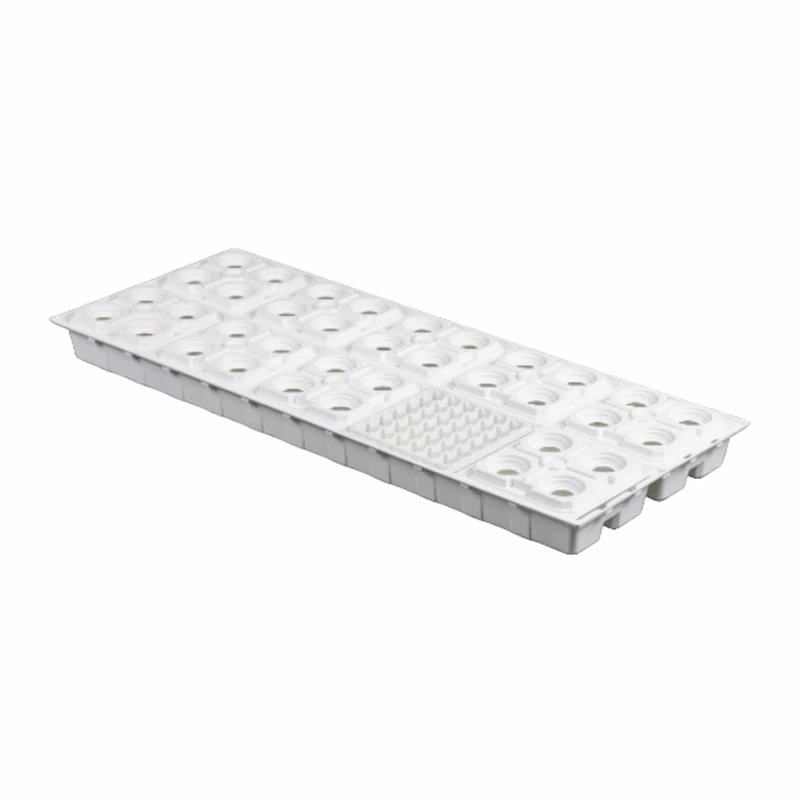
Disinfecting grow Growing Trays can be done using specialized products designed for this type of activity or household items found in your kitchen. There are several ways to disinfect your Growing Trays.
Boiling water
The simplest, though not entirely ideal, method involves immersing the Growing Trays in boiling water. However, practicality may be an issue, as maintaining a water temperature of 100 degrees Celsius for a minimum of 5 minutes can be challenging, especially with varying tray sizes or quantities.
Water and Vinegar
Another simple approach is to use a solution of white vinegar and water. Simply mix them, pour the mixture into a sprayer, and thoroughly spray your Growing Trays. It's a natural and effective mixture that kills germs and disinfects.
Bleach
While some recommend disinfecting with chlorine-containing bleach, it's important to be cautious. Remember that such products may contain various chemicals that may not be suitable for use in contact with plants meant for consumption. When deciding on a disinfection method, prioritize the safety of both your crops and the environment.
Hydrogen peroxide
Hydrogen peroxide, or H2O2, is a popular and eco-friendly choice for keeping microgreens Growing Trays clean. It's a safe alternative to chlorine bleach, breaking down into oxygen and water. This versatile product not only sterilizes Growing Trays but also combats bacteria, treats fungal growth, and prevents mold and mildew. A 3% solution, easily found in pharmacies or online, is effective for tray use. Handle it with care: store it away from heat, wear gloves, and avoid contact with eyes.
5 Ways to Use Growing Trays in Hydroponic Gardening
In any hydroponic system, plant roots need a support system of some kind due to the absence of soil. A common support system to house plant roots is the grow tray.
Wick System
Trays are used to hold plants in this passive grow system to deliver the nutrient solution from the reservoir with a wick.
01
Drip System
Growing Trays are used to hold plants. The submersed pump is used to drip a nutrient solution onto the base of each plant by a small drip line.
02
Ebb and Flow
The ebb and flow system temporarily floods the grow tray with the nutrient solution and then the solution drains back into the reservoir.
03
Nutrient Film Technique (NFT)
Nutrient solution is pumped into the growing tray that’s usually a tube and flows over the roots of the plants. This system also has the solution draining back into the reservoir.
04
Deep Water Culture
Doesn’t use Growing Trays, but rather a platform that holds the plants. The platform is usually made of Styrofoam and floats, with the roots submerged in the nutrient enriched solution.
05
Our Factory
We have multi CNC mold processing centers, which can meet the mold processing of aluminum molds,resin mold,wood mold ect. We have raw materials, mold, product design, production and processing and export trade, we can offer customers with comprehensive and integrated plastic parts molding. We can also cooperate with customer mold modification.


Our Certificate


FAQ
We're well-known as one of the leading growing trays manufacturers and suppliers in China. If you're going to wholesale customized growing trays, welcome to get more information from our factory.
growing trays, Heavy Duty Planting Growing Tray, Large Size Fodder Table Growing Trays