

How Custom Plastic Thermoforming Works: From Design to Finished Parts
Swellder Custom plastic thermoforming is a versatile manufacturing process used to produce plastic trays, automotive components, equipment housings, protective covers, and many other customized plastic parts.
Compared with injection molding, thermoforming can be a practical solution for many large-format or relatively low-to-medium-volume plastic components, depending on the product design, material, tooling requirements, and production volume.
But how does a custom thermoformed plastic product go from an initial drawing to a finished component?
In this guide, we explain the key stages of the custom thermoforming process, including design review, material selection, mold development, forming, trimming, and quality inspection.
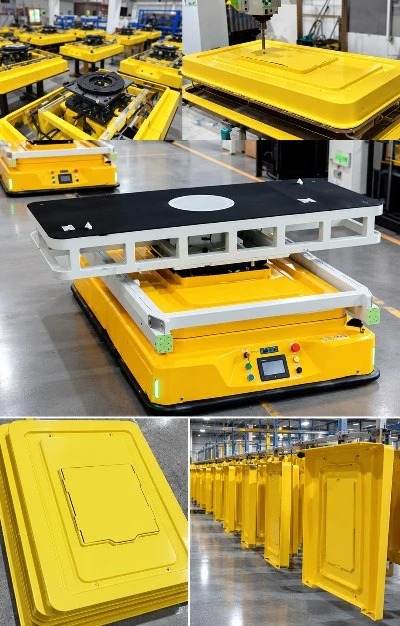
1. Product Design and Engineering Review
Every successful thermoforming project starts with a clear understanding of the product requirements.
Before manufacturing begins, the supplier needs to evaluate the product drawing, 3D model, reference sample, or application requirements.
Important factors include:
(1)Overall dimensions and required tolerances
(2)Product geometry and forming depth
(3)Wall thickness requirements
(4)Material properties and operating environment
(5)Surface finish and appearance
(6)Assembly interfaces and functional features
(7)Expected order quantity and production requirements
For complex plastic parts, an engineering review can help identify potential manufacturing challenges before tooling begins.
For example, deep cavities, sharp corners, narrow recesses, and complex undercuts may affect material distribution, mold release, or trimming feasibility.
Identifying these issues early can help reduce unnecessary tooling modifications and sample revisions.
2. Choosing the Right Plastic Material
Material selection is an important part of custom thermoforming because different plastics offer different combinations of strength, flexibility, appearance, chemical resistance, and cost.
The best material depends on the product's intended application and performance requirements.
Common materials used in thermoforming include:
ABS (Acrylonitrile Butadiene Styrene)
ABS is widely used for plastic housings, covers, automotive components, and industrial parts where impact resistance and surface appearance are important.
HIPS (High Impact Polystyrene)
HIPS is often considered for cost-sensitive applications, including packaging trays, protective components, and general-purpose formed parts.
PETG (Polyethylene Terephthalate Glycol)
PETG offers good transparency and formability, making it suitable for certain transparent covers, displays, and packaging applications.
PP (Polypropylene)
PP may be suitable for applications requiring chemical resistance, low density, or particular flexibility characteristics. Its forming and cooling behavior should be evaluated for the specific design.
PC (Polycarbonate)
PC is considered for applications requiring high impact resistance and specific thermal performance, subject to the selected grade and product requirements.
For electronic packaging and component handling, antistatic or electrostatic dissipative materials may also be required.
The appropriate ESD material should be selected according to the required electrical performance, component sensitivity, handling environment, and applicable specifications.
An important tip: Do not select a plastic material based on price alone. The material grade, sheet thickness, forming behavior, service environment, and final performance requirements should all be considered before production.
3. Mold Design and Tooling Development
Once the design and material requirements have been reviewed, the next step is mold development.
The mold defines the basic shape of the formed plastic part. Its design also influences dimensional consistency, surface quality, material distribution, and production efficiency.
Depending on the product and production requirements, tooling may be made from materials such as aluminum or other suitable mold materials.
Several design considerations are particularly important:
Draft angles to support part release
Corner radii to reduce excessive material thinning
Vacuum paths and venting where required
Mold surface finish
Cooling and dimensional stability
Trimming allowances and reference features
For custom industrial components, automotive parts, and equipment covers, the mold should be evaluated together with the trimming and assembly requirements.
This is because a part that can be formed successfully may still require additional engineering work to achieve the final dimensions and fit.
Before committing to full production, prototype samples or initial formed parts can help verify the design and identify necessary adjustments.
4. Plastic Sheet Heating and Forming
Thermoforming begins with a thermoplastic sheet that is heated until it reaches a suitable forming temperature.
The sheet must be heated sufficiently and uniformly for the intended material and part geometry. Heating conditions vary depending on the plastic type, sheet thickness, machine configuration, and product design.
During vacuum forming, the heated sheet is brought into contact with a mold. Air is evacuated from between the sheet and the mold, allowing atmospheric pressure to help the softened plastic conform to the mold surface.
The formed part is then cooled sufficiently to retain its shape before being removed from the mold.
Several factors influence the quality of this stage:
Heating temperature and uniformity
Sheet thickness and material properties
Forming depth and geometry
Vacuum performance
Cooling conditions
Material distribution across the formed surface
One common engineering consideration is wall thinning.
As a plastic sheet stretches over a mold, material redistributes across the product. Deep cavities and certain complex geometries may produce thinner areas than others.
The original sheet thickness therefore does not automatically equal the final wall thickness at every point on the finished part.
For applications with structural or dimensional requirements, critical areas should be evaluated during product development and sample approval.
5. CNC Trimming and Edge Finishing
After forming, the part typically retains excess material around its perimeter.
Trimming removes this excess material and creates the required final outline, openings, and functional features.
Depending on the geometry and tolerance requirements, trimming may involve CNC machining, dedicated cutting fixtures, or other suitable methods.
CNC trimming is particularly useful for parts requiring repeatable cutting paths or more complex outlines.
Important considerations include:
Final dimensions and tolerances
Hole and opening positions
Edge quality
Mounting and assembly features
Part positioning during trimming
Consistency across production batches
For automotive components and industrial housings, trimming accuracy can directly affect how the part fits with neighboring components.
For trays and packaging products, the final outline and cavity geometry can influence product loading, handling, and compatibility with downstream processes.
6. Surface Finishing and Secondary Operations
Some thermoformed parts require additional processing after forming and trimming.
Depending on the application, these operations may include:
Deburring and edge finishing
Drilling or additional machining
Painting or coating
Screen printing
Adhesive bonding
Assembly with other components
Not every product needs these operations. The appropriate finishing process should be determined by the required appearance, functionality, and end-use environment.
For visible automotive components, surface appearance and consistency may be especially important.
For industrial housings, assembly interfaces and functional openings may take priority.
For packaging trays, clean edges, consistent cavities, and reliable component positioning may be more important than decorative finishing.
Defining these requirements early helps the manufacturer plan the appropriate production process.
7. Quality Inspection and Sample Verification
Quality control should be considered throughout the manufacturing process rather than only after production is complete.
Depending on the project requirements, inspection may cover:
Material verification
Confirm that the selected material and sheet thickness meet the agreed specifications.
Dimensional inspection
Measure critical dimensions, openings, and mounting features against the approved drawing.
Visual inspection
Check for surface defects, visible deformation, unwanted marks, and other appearance issues.
Functional verification
Where applicable, check fit, assembly compatibility, loading requirements, or other product-specific functions.
Special performance testing
Certain applications may require additional testing, such as electrical resistance measurements for ESD products or environmental testing for components exposed to demanding operating conditions.
The inspection plan should be agreed upon according to the product's intended use, critical characteristics, and customer requirements.
For custom projects, approved drawings, samples, tolerances, and acceptance criteria provide a clearer basis for evaluating production consistency.
8. Packaging and Delivery
The final stage is preparing the finished parts for shipment.
Packaging should protect the product from scratches, deformation, contamination, and handling damage during transportation and storage.
Depending on the part's dimensions, surface finish, and shipping conditions, suitable solutions may include individual protective packaging, separators, cartons, or palletized shipments.
For international orders, packaging arrangements should also consider container utilization, stacking requirements, and the customer's receiving process.
Packaging requirements should be confirmed before mass production, particularly for large plastic components or parts with sensitive cosmetic surfaces.
9. What Should You Prepare Before Requesting a Thermoforming Quote?
Providing clear project information helps a manufacturer evaluate feasibility and prepare a more relevant quotation.
If you are sourcing custom thermoformed plastic parts, consider preparing the following:
Product drawing or 3D model: STEP, STP, IGES, or other available formats.
Material requirements: Specify the preferred material or describe the required performance.
Product dimensions: Include critical dimensions and tolerances where available.
Application details: Explain how the component will be used and what it needs to withstand.
Surface requirements: Identify color, texture, gloss level, or other appearance expectations.
Order quantity: Provide the initial order quantity and, if known, the expected annual demand.
Special requirements: Include assembly details, ESD performance, packaging needs, or other functional specifications.
If a complete drawing is not available, a physical sample, reference images, or a preliminary design may still help start the discussion.
The manufacturer can then determine what additional information is needed for a proper engineering assessment.
Conclusion: Successful Thermoforming Starts with Good Engineering
Custom plastic thermoforming involves more than heating a plastic sheet and forming it over a mold.
Material selection, mold design, forming conditions, trimming accuracy, secondary operations, and quality inspection all contribute to the final product.
For buyers developing custom plastic trays, automotive components, industrial housings, or other formed plastic parts, discussing these factors early can help identify manufacturing challenges and establish realistic project requirements.
At Swellder Plastics, we work with customers on custom plastic forming projects based on their product requirements and application needs.
Have a custom plastic part to develop?
Send us your drawing, 3D model, sample photos, or initial project requirements. Our team can review the available information and discuss material options, manufacturing feasibility, and the next steps for your project.
Contact us to discuss your custom thermoforming requirements. please feel free to contact :amanda.young@swellder.com whatsapp"008618115198110