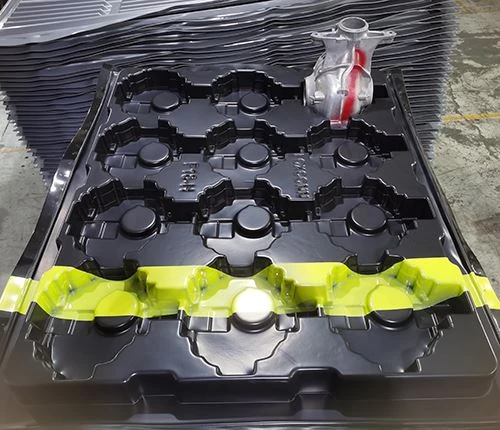
Hey there! I'm a supplier of thermoforming packaging trays, and today I'm gonna chat with you about the materials commonly used for these trays. Thermoforming is a super cool process where we heat up a plastic sheet until it's soft and then mold it into the shape we need for the packaging tray. Let's dive into the different materials we often use.
Polyethylene (PE)
Polyethylene is one of the most widely used materials in thermoforming packaging trays. It comes in two main types: high - density polyethylene (HDPE) and low - density polyethylene (LDPE).
HDPE is known for its strength and stiffness. It can withstand a fair amount of pressure without deforming, which makes it great for packaging heavier items. For example, if you're packaging tools or some hardware parts, an HDPE thermoforming tray can provide the necessary support. It's also resistant to moisture, so it can protect the contents from getting wet.
On the other hand, LDPE is more flexible. It has a lower melting point compared to HDPE, which makes it easier to thermoform into different shapes. LDPE trays are often used for packaging food items like fruits or small snacks. The flexibility of LDPE allows it to conform to the shape of the product, providing a snug fit. And since it's food - grade, it's safe to use for direct contact with food.
Polypropylene (PP)
Polypropylene is another popular choice. It has excellent chemical resistance, which means it can hold up well against a variety of chemicals without getting damaged. This makes it suitable for packaging products like cleaning agents or some types of chemicals.
PP is also lightweight, which is a big plus when it comes to shipping costs. If you're a business looking to save on shipping, using polypropylene thermoforming trays can be a smart move. Additionally, it has a high melting point, so it can withstand relatively high temperatures without warping. This property makes it useful for applications where the trays might be exposed to heat during storage or transportation.
Polystyrene (PS)
Polystyrene is well - known for its clarity and low cost. Clear polystyrene trays are commonly used in the retail industry to display products. You've probably seen them in stores when you're looking at small electronic gadgets or beauty products. The transparency of polystyrene allows customers to easily see what's inside the tray, which is great for marketing.
There are two types of polystyrene: expanded polystyrene (EPS) and solid polystyrene. EPS is lightweight and has good insulation properties. It's often used for packaging items that need protection from shock, like fragile electronics. Solid polystyrene, on the other hand, is more rigid and can be used for making trays with a specific shape and structure.
Acrylonitrile Butadiene Styrene (ABS)
ABS is a tough and durable material. It has excellent impact resistance, which means it can protect the contents of the tray from being damaged if the tray is dropped or bumped. ABS thermoforming trays are commonly used in the automotive industry. You can check out our OEM Vacuum Forming Blister ABS Auto Parts Tray for more details on how we use ABS to make trays for auto parts.
ABS also has a good surface finish, which makes it look nice. It can be easily painted or decorated, so it's often used for products where aesthetics matter, like consumer electronics or high - end products.
Polycarbonate (PC)
Polycarbonate is known for its high strength and transparency. It's one of the strongest plastics available, and it can withstand a lot of force without breaking. PC thermoforming trays are often used for packaging high - value items that need extra protection, such as medical devices or precision instruments.
The transparency of polycarbonate allows for easy inspection of the contents without opening the tray. This is very useful in industries where quality control is important. However, polycarbonate is relatively more expensive compared to some of the other materials we've discussed, but the added protection and functionality it provides can be worth the cost.
Thermoformed Plastic ESD Trays
In industries where electrostatic discharge (ESD) is a concern, like the electronics industry, Thermoformed Plastic esd Trays are used. These trays are made from special plastics that have anti - static properties. They prevent the build - up of static electricity, which can damage sensitive electronic components.
The materials used for ESD trays are often modified versions of the plastics we've already talked about. For example, polypropylene or polystyrene can be treated with anti - static agents to make them suitable for ESD protection.
Factors to Consider When Choosing a Material
When deciding which material to use for thermoforming packaging trays, there are several factors to consider.
First, think about the product you're going to package. If it's a heavy item, you'll need a strong and rigid material like HDPE or ABS. If it's a food item, you'll want a food - grade material like LDPE or PP.
Cost is also an important factor. Some materials, like polycarbonate, are more expensive than others. You need to balance the cost of the material with the level of protection and functionality it provides.
The manufacturing process is another consideration. Some materials are easier to thermoform than others. For example, LDPE has a lower melting point, so it can be formed at a lower temperature, which can save energy and time during the manufacturing process.
Our Thermoformed Trays
At our company, we have a wide range of Thermoformed Trays made from different materials to meet your specific needs. Whether you need a tray for automotive parts, food products, or electronic components, we've got you covered.
We use state - of - the - art thermoforming technology to ensure that our trays are of the highest quality. Our team of experts can help you choose the right material for your product based on your requirements and budget.
If you're interested in our thermoforming packaging trays, don't hesitate to reach out for a purchase negotiation. We're here to work with you to find the best packaging solution for your business.
References
- Modern Plastics Encyclopedia
- Handbook of Thermoforming
So, that's a wrap on the commonly used materials for thermoforming packaging trays. I hope this blog has been helpful to you. If you have any questions or need more information, feel free to contact us.