

As a supplier of Thermoform Blister Packaging, I've witnessed firsthand the challenges and opportunities in reducing waste during the production process. In this blog post, I'll share some practical strategies and insights on how to minimize waste in thermoform blister packaging production, which not only benefits the environment but also improves cost - efficiency.
Material Selection
One of the most fundamental steps in reducing waste starts with material selection. The type of plastic used in thermoform blister packaging has a significant impact on both the production process and the final waste generation.
When choosing materials, opt for those with high recyclability. For example, PET (Polyethylene Terephthalate) is a popular choice in the packaging industry due to its excellent recyclability. It can be easily collected, sorted, and processed into new products. By using recyclable materials, we can close the loop on the material life - cycle, reducing the amount of plastic that ends up in landfills.
Another aspect of material selection is the thickness. Using the right thickness of the plastic sheet is crucial. If the sheet is too thick, it not only increases material consumption but also requires more energy during the thermoforming process. On the other hand, if it's too thin, it may not provide adequate protection for the product, leading to higher rejection rates and waste. Conducting thorough product - protection tests can help determine the optimal thickness for each specific application.
Process Optimization
The thermoforming process itself can be optimized to reduce waste. One key area is the trimming process. During thermoforming, excess plastic is trimmed off to create the final shape of the blister packaging. By improving the die design, we can minimize the amount of excess material. For instance, using nested or multi - cavity die designs allows for more efficient use of the plastic sheet, reducing the overall scrap rate.
Temperature control is also vital. Inaccurate temperature settings can lead to defects such as uneven heating, which may result in the rejection of the entire batch. Implementing advanced temperature sensors and control systems can ensure that the plastic sheet is heated uniformly, improving the quality of the formed blisters and reducing waste caused by defective products.
Moreover, the forming pressure needs to be carefully calibrated. Too much pressure can cause the plastic to rupture, while too little pressure may result in incomplete forming. Regular maintenance of the thermoforming equipment, including checking and adjusting the pressure - applying components, can help maintain consistent forming quality.
Recycling and Reuse
Establishing an effective recycling and reuse system is an essential part of waste reduction. In - house recycling of the scrap plastic generated during production is a practical approach. The trimmed excess plastic can be granulated and re - introduced into the production process. However, it's important to ensure that the recycled material meets the quality standards for the blister packaging.
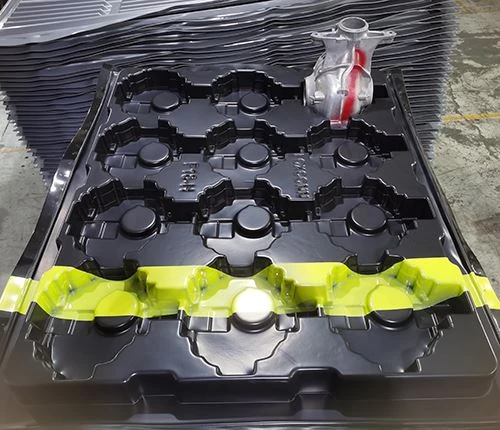
We can also explore opportunities for reusing the packaging trays. For example, Custom cavity vacuum forming&blister package tray can be designed in a way that they can be easily disassembled and reused for different products. This not only reduces waste but also provides a cost - effective solution for customers.
Quality Control
Implementing a strict quality control system is crucial for waste reduction. By detecting and correcting defects early in the production process, we can prevent the production of large quantities of defective products.
Visual inspection stations can be set up at various stages of the production line. Workers can check for visible defects such as cracks, air bubbles, or improper sealing. Additionally, using automated inspection technologies, such as machine vision systems, can provide more accurate and consistent defect detection. These systems can quickly identify even the smallest defects, allowing for immediate corrective action.
Regular calibration of the inspection equipment is also necessary to ensure its accuracy. By maintaining high - quality standards throughout the production process, we can significantly reduce the amount of waste due to rejected products.
Supply Chain Management
Effective supply chain management can also contribute to waste reduction. Working closely with suppliers to ensure the timely delivery of high - quality plastic sheets is essential. Delays in material delivery can disrupt the production schedule, leading to increased waste as the production line may need to be shut down or run at a lower efficiency.
Collaborating with customers to understand their specific packaging requirements is equally important. By customizing the packaging design according to the product's size, shape, and transportation needs, we can avoid over - packaging. For example, Abs Vacuum Forming Thermoformed Plastic black Trays Products can be tailored to fit the products precisely, reducing the use of unnecessary packaging materials.
Employee Training
Well - trained employees play a crucial role in waste reduction. Providing comprehensive training on the thermoforming process, quality control, and waste - reduction strategies can empower employees to make informed decisions on the production floor.
Employees should be educated on the importance of waste reduction and how their individual actions can contribute to the overall goal. Training programs can include hands - on demonstrations of proper equipment operation, defect detection techniques, and recycling procedures.
Regular refresher courses can also be conducted to keep employees updated on the latest waste - reduction technologies and best practices. By involving employees in the waste - reduction initiative, we can create a culture of sustainability within the company.
Continuous Improvement
Waste reduction is an ongoing process. Regularly reviewing and analyzing the production data can help identify areas for further improvement. Key performance indicators (KPIs) such as scrap rate, rejection rate, and material utilization rate can be monitored over time.
Based on the analysis, new waste - reduction strategies can be developed and implemented. For example, if the data shows that a particular product line has a high scrap rate, further investigation can be done to identify the root cause, such as a problem with the die design or the forming process.

Collaborating with industry peers and participating in research and development projects can also provide new insights and technologies for waste reduction. By staying at the forefront of innovation, we can continuously improve our waste - reduction efforts.
In conclusion, reducing waste in thermoform blister packaging production is a multi - faceted challenge that requires a comprehensive approach. From material selection and process optimization to recycling and reuse, every step in the production process can be optimized to minimize waste. By implementing these strategies, we can not only contribute to a more sustainable environment but also improve the competitiveness of our business.
If you're interested in our Thermoformed Trays or have any questions about waste - reduced thermoform blister packaging, we encourage you to reach out and start a procurement discussion. We're committed to providing high - quality, sustainable packaging solutions tailored to your specific needs.
References
- "Plastics Packaging: Technology and Recycling" by John A. Robertson
- "Thermoforming Handbook" by James F. Carley