

Hey there! As a supplier of thermoformed trays, I often get asked about the heat - resistance properties of these nifty products. So, let's dive right in and explore what makes thermoformed trays stand up to the heat.
Understanding Thermoformed Trays
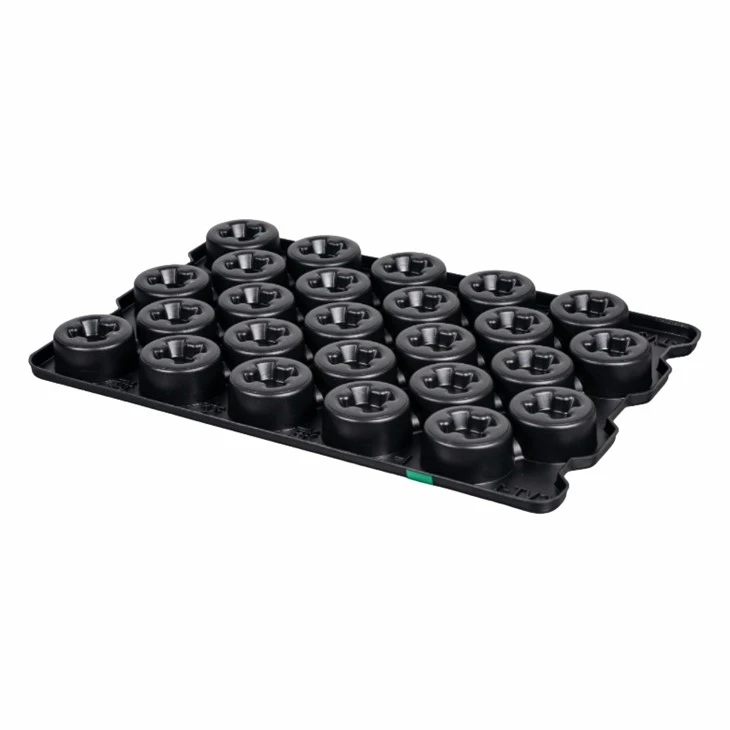
First off, let's talk a bit about what thermoformed trays are. Thermoforming is a manufacturing process where a plastic sheet is heated to a pliable forming temperature, then stretched onto a single-surface mold and cooled to a finished shape. These trays are used in a wide range of industries, from food packaging to electronics.

Factors Affecting Heat Resistance
The heat - resistance properties of thermoformed trays depend on several factors. One of the most important is the type of plastic material used.
Plastic Materials
- Polystyrene (PS): This is a common material for thermoformed trays. It's relatively inexpensive and easy to work with. However, its heat - resistance isn't the best. PS starts to soften at around 70 - 100°C (158 - 212°F). So, if you're looking for trays to hold hot food for an extended period or for applications in a high - heat environment, PS might not be the best choice.
- Polypropylene (PP): PP is a popular option when heat resistance is a concern. It has a higher melting point than PS, typically around 160 - 170°C (320 - 338°F). This makes it suitable for applications where the trays might be exposed to moderately high temperatures, like in the food industry for microwave - safe containers or in some industrial settings. You can find our Thermoformed Plastic esd Trays made from high - quality PP for various uses.
- Polycarbonate (PC): PC is known for its excellent heat resistance and impact strength. It can withstand temperatures up to 135 - 145°C (275 - 293°F) continuously and even higher for short periods. PC trays are often used in applications where high - temperature sterilization is required, such as in the medical and laboratory industries.
Tray Thickness
The thickness of the thermoformed tray also plays a role in its heat - resistance. Thicker trays generally have better heat - insulation properties. A thicker layer of plastic can slow down the transfer of heat, keeping the contents inside the tray at a more stable temperature. For example, if you're using trays to transport hot food, a thicker tray will help keep the food warm for longer.

Design and Structure
The design of the tray can impact its heat - resistance as well. Trays with ribbed or honeycomb structures can provide better structural integrity and heat - distribution properties. These designs can help prevent the tray from warping or deforming under heat. Additionally, proper ventilation channels in the tray design can allow hot air to escape, reducing the risk of overheating and damage to the tray.
Testing Heat Resistance
We, as a thermoformed tray supplier, take heat - resistance testing very seriously. We use a variety of methods to ensure that our trays meet the required standards.
Oven Testing
One of the most common methods is oven testing. We place the trays in an oven at a specific temperature for a set period of time. Then, we examine the trays for any signs of deformation, such as warping, melting, or discoloration. This helps us determine the maximum temperature that the trays can withstand without significant damage.
Real - World Simulation
We also conduct real - world simulation tests. For example, if the trays are intended for food packaging, we might fill them with hot food and monitor how they perform over time. This gives us a better understanding of how the trays will behave in actual use.

Applications Based on Heat Resistance
The heat - resistance properties of thermoformed trays determine their suitability for different applications.
Food Packaging
In the food industry, heat - resistant trays are crucial. For example, if you're packaging hot meals that need to be kept warm until they're served, you'll need trays that can withstand the heat without melting or releasing harmful chemicals. Our Thermoformed Packaging Trays made from heat - resistant plastics are perfect for this purpose. They can keep the food fresh and safe while maintaining their shape and integrity.
Electronics
In the electronics industry, heat - resistant trays are used to protect sensitive components during manufacturing and transportation. Electronic components can generate heat, and the trays need to be able to withstand this heat without deforming. This ensures that the components remain in place and are not damaged.
Medical and Laboratory
In medical and laboratory settings, trays often need to be sterilized using high - temperature methods. Heat - resistant trays made from materials like polycarbonate can withstand these sterilization processes without losing their structural integrity. This is essential for maintaining a sterile environment and ensuring the safety of medical procedures.
Customization for Heat Resistance
We understand that different customers have different heat - resistance requirements. That's why we offer Custom Thermoformed Blister Packaging Solutions. Whether you need trays with a specific heat - resistance rating or a unique design to enhance heat - distribution, we can work with you to create the perfect solution.
Conclusion
So, there you have it! The heat - resistance properties of thermoformed trays are determined by the plastic material, tray thickness, design, and structure. By understanding these factors, you can choose the right trays for your specific application. Whether you're in the food, electronics, or medical industry, we've got the thermoformed trays that can meet your heat - resistance needs.
If you're interested in learning more about our thermoformed trays or discussing your specific requirements, don't hesitate to reach out. We're here to help you find the best packaging solutions for your business.
References
- "Plastics for Packaging: Properties, Processing, Applications" by Hans - Joachim Endres
- "Thermoforming Handbook" by James R. Wagner