

Hey there! As a supplier of microgreens trays, I often get asked, "How many microgreens can fit in a tray?" Well, it's not a one - size - fits - all answer, and there are a bunch of factors that come into play.
First off, let's talk about the different types of trays we offer. We've got the 1020 Microgreen Trays Shallow Extra Strength. These trays are pretty popular among microgreen growers. They're shallow but have extra strength, which means they can handle the weight of the growing medium and the microgreens without bending or breaking easily.
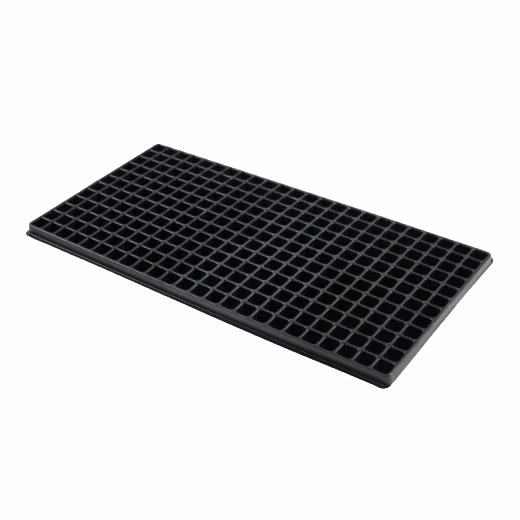
Another option is the 21 32 36 50 72 105 128 Cells Tray. These trays come with different cell counts, so you can choose the one that suits your growing needs. The number of cells affects how many individual microgreen plants you can grow in the tray.
And then there's the Shallow 1020 Trays No Holes. These are great if you're using a bottom - watering system or if you don't want any drainage issues.
Now, back to the question of how many microgreens can fit in a tray.
Factors Affecting the Number of Microgreens in a Tray
1. Tray Size
The obvious factor is the size of the tray. A larger tray will generally hold more microgreens than a smaller one. For example, our 1020 trays are a standard size in the microgreen industry. They're big enough to give the microgreens plenty of space to grow, but not so large that they become unmanageable.
2. Microgreen Variety
Different microgreen varieties have different growth habits. Some, like sunflower microgreens, are quite large and need more space to spread out. So, you won't be able to fit as many sunflower microgreens in a tray compared to smaller varieties like mustard microgreens. Mustard microgreens are more compact and can be planted closer together, allowing you to fit more of them in the same tray space.
3. Spacing
How you space out the microgreen seeds also matters. If you plant the seeds too close together, the microgreens might not have enough room to grow properly. They could become overcrowded, which can lead to problems like poor air circulation and increased risk of diseases. On the other hand, if you space them out too much, you're not making the most of the tray space.

Calculating the Number of Microgreens
Let's say you're using our 1020 trays and growing mustard microgreens. A good rule of thumb is to plant about 1 - 2 grams of mustard microgreen seeds per square foot of tray space. Since a 1020 tray is approximately 1.4 square feet, you'd need about 1.4 - 2.8 grams of mustard microgreen seeds.
Once the seeds germinate and grow into microgreens, you can expect to harvest around 8 - 12 ounces of mustard microgreens from a single 1020 tray.
If you're growing sunflower microgreens, you'll need to use less seed per square foot. Sunflower seeds are larger, and each plant needs more space. You might use around 0.5 - 1 gram of sunflower seeds per square foot. From a 1020 tray, you could harvest around 6 - 10 ounces of sunflower microgreens.
For the cell trays, it's a bit easier to calculate. If you're using a 72 - cell tray and growing radish microgreens, each cell can hold one or two radish microgreen plants. So, you'd have around 72 - 144 radish microgreen plants in the tray.
Tips for Maximizing Tray Space
1. Succession Planting
You can do succession planting in your trays. Once you harvest one batch of microgreens, quickly plant a new batch of seeds. This way, you're always making use of the tray space and getting a continuous supply of microgreens.
2. Use Different Varieties Together
Some microgreen varieties can be grown together in the same tray. For example, you can mix lettuce and arugula microgreens. They have similar growth requirements and can co - exist in the same tray without overcrowding each other.
3. Proper Trimming
Regularly trim your microgreens. This not only encourages new growth but also helps to keep the plants in check and makes the most of the available space in the tray.
Conclusion
So, as you can see, the number of microgreens that can fit in a tray depends on a lot of things. But with the right tray selection and proper growing techniques, you can maximize the yield from each tray.
If you're interested in getting high - quality microgreens trays for your growing operation, we're here to help. Whether you're a small - scale home grower or a large - scale commercial producer, we've got the trays to suit your needs. Reach out to us to start a conversation about your microgreen tray requirements. We're looking forward to working with you!
References
- "The Microgreen Grower's Handbook"
- Various industry studies on microgreen cultivation and tray usage.