

Hey there, fellow gardening enthusiasts! I'm a supplier of Shallow 1020 Trays, and I often get asked whether these trays are suitable for growing peppers. Well, let's dive right into it and find out.
First off, let's talk a bit about Shallow 1020 Trays. These trays are quite popular in the gardening world. They come in different variations, like the Shallow 1020 Trays No Holes and the 1020 Microgreen Trays Shallow Extra Strength. They're known for their standard size, which is about 10 inches by 20 inches, making them easy to handle and fit into various growing setups.
Now, peppers are a great crop to grow. They come in all sorts of colors, shapes, and flavors, from sweet bell peppers to spicy jalapeños. But when it comes to growing them, they do have some specific needs.
One of the main considerations for growing peppers is the root system. Peppers have a moderately deep root system. They need enough space for their roots to spread out and grow strong. Shallow 1020 Trays, as the name suggests, are shallow. Typically, they have a depth of around 1 - 2 inches. This might seem a bit limiting for peppers at first glance.
However, it's not all bad news. If you're growing peppers in the early stages, like starting them from seeds or growing them as seedlings, Shallow 1020 Trays can work just fine. When peppers are young, their root systems are still developing and don't require a huge amount of space. You can use these trays to start your pepper seeds in a controlled environment. Fill the trays with a good quality seed - starting mix, plant the seeds, and keep them in a warm and well - lit area. The shallow depth allows for easy monitoring of the soil moisture and temperature, which are crucial for successful germination.
Another advantage of using Shallow 1020 Trays for young pepper plants is that they're easy to manage. You can move them around easily, place them under grow lights, or keep them in a greenhouse. They also take up less space compared to larger containers, which is great if you're short on growing space.
But as the pepper plants start to grow and mature, they'll need more room for their roots. At this point, you'll need to transplant them into larger containers. If you don't, the limited root space in the shallow trays can lead to stunted growth, reduced yields, and overall weaker plants.
Let's also talk about soil and drainage. Peppers prefer well - drained soil. The Shallow 1020 Trays No Holes can be a bit of a challenge in this regard. Without proper drainage, water can accumulate in the tray, leading to waterlogged soil and root rot. To overcome this, you can either drill some holes in the bottom of the trays or use a layer of gravel or perlite at the bottom to improve drainage.
On the other hand, if you have trays with holes, like the 1020 Microgreen Trays Shallow Extra Strength, you need to be careful about watering. Since the trays are shallow, they can dry out quickly. You'll need to water more frequently to keep the soil moist but not soggy.

Now, let's consider the number of plants you can grow in a Shallow 1020 Tray. If you're starting pepper seeds, you can plant multiple seeds in a single tray. However, you'll need to thin them out as they grow to give each plant enough space. A good rule of thumb is to leave about 2 - 3 inches of space between each young pepper plant. This will ensure that they have enough light, air circulation, and nutrients to grow properly.
In addition to starting peppers from seeds, you can also use Shallow 1020 Trays for growing micro - peppers. Micro - peppers are young, immature pepper plants that are harvested when they're still small. They're a great addition to salads, sandwiches, and other dishes. Since micro - peppers don't grow as large as mature peppers, they can be grown successfully in shallow trays throughout their short growth cycle.
When it comes to fertilizing, peppers need a balanced supply of nutrients. In the early stages, a light application of a slow - release fertilizer can be added to the seed - starting mix in the Shallow 1020 Trays. As the plants grow, you can switch to a more concentrated fertilizer, but be careful not to over - fertilize, especially in the shallow trays, as this can lead to salt build - up in the soil.
Let's also touch on the temperature requirements. Peppers are warm - season crops. They need a consistent temperature of around 70 - 80°F (21 - 27°C) for optimal growth. Shallow 1020 Trays can be easily placed in a warm area, like a sunny windowsill or under a heat mat, to provide the right temperature for the young pepper plants.
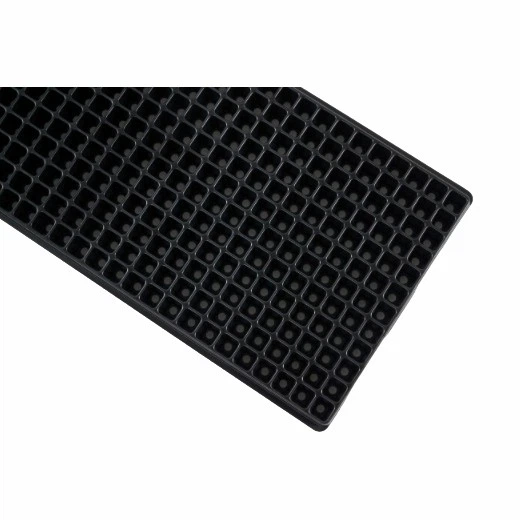
Now, if you're thinking about using Shallow 1020 Trays for a commercial pepper growing operation, it's important to plan ahead. You'll need to have a system in place for transplanting the young plants into larger containers at the right time. You can also consider using different types of trays, like the 21 32 36 50 72 105 128 Cells Tray, which can be used for starting multiple pepper plants in individual cells. This allows for better separation of the plants and easier transplanting.
In conclusion, Shallow 1020 Trays can be a great option for starting pepper seeds and growing young pepper plants or micro - peppers. They offer convenience, easy management, and are suitable for small - scale or early - stage pepper growing. However, they're not ideal for growing mature pepper plants due to the limited root space.
If you're interested in trying out Shallow 1020 Trays for your pepper growing needs, or if you have any questions about our products, feel free to reach out. We're here to help you make the most of your gardening experience. Whether you're a beginner or an experienced gardener, we can provide you with the right trays and advice to ensure successful pepper growth.
References:
- "The Vegetable Gardener's Bible" by Edward C. Smith
- "Pepper Production Guide" by various agricultural extension services